
What is Paint Protection Film (PPF)? Benefits, Pros & Cons [Complete Guide]
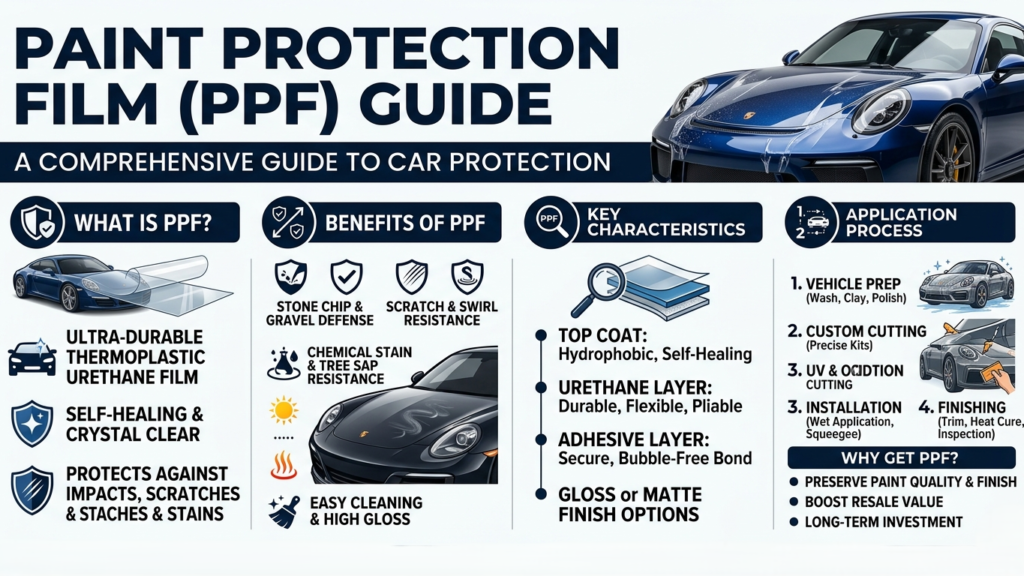
If you want to keep your car looking brand new for years, Paint Protection Film (PPF) is one of the most effective solutions available today.
From protecting against rock chips to preventing scratches, PPF has become a popular choice for car owners, luxury vehicle enthusiasts, and automotive detailers.
In this complete guide, we’ll cover everything you need to know about PPF including:
- What is Paint Protection Film?
- How Does PPF Work?
- Key Benefits of Paint Protection Film
- Pros of Paint Protection Film
- Cons of Paint Protection Film
- Where is PPF Usually Applied?
- How Long Does PPF Last?
- Is Paint Protection Film Worth It?
- PPF Maintenance Tips
- Frequently Asked Questions About PPF
- Final Thoughts on Paint Protection Film
- Protect Your Car’s Paint with Professional PPF Installation
- call us now: +91 81233 51391
What is Paint Protection Film?
Paint Protection Film (PPF) is a transparent urethane film applied to a vehicle’s painted surfaces to protect them from damage.
The film acts as a protective barrier between your car’s paint and external elements, such as:
- Road debris
- Stone chips
- Scratches
- Bug splatter
- Bird droppings
- UV rays
Modern PPF technology includes self-healing properties, meaning minor scratches disappear when exposed to heat or sunlight.
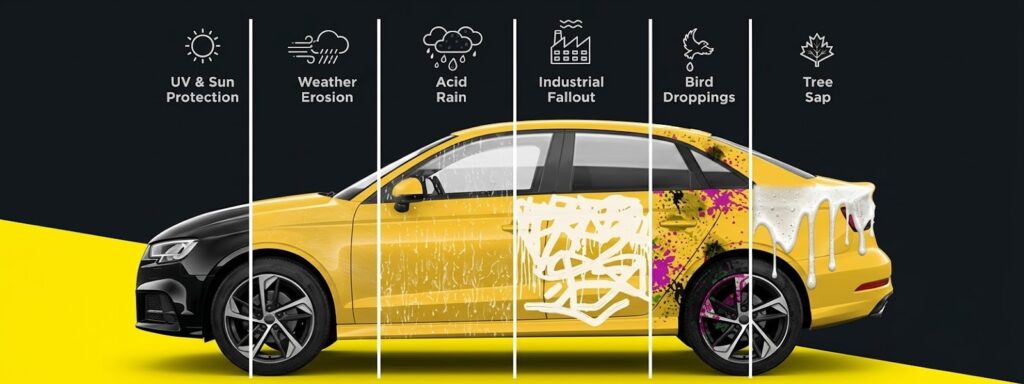
This makes it one of the best paint protection options available for vehicles today.
How Does PPF Work?
PPF works by creating a thick protective layer over the car’s paint.
Most high-quality films are 7–10 mil thick, which allows them to absorb impacts from small stones and debris before they reach the paint.
The film typically consists of multiple layers:
- Clear coat layer (self-healing)
- Polyurethane protection layer
- Adhesive layer
- Protective backing
These layers work together to protect your car’s paint from damage.
Key Benefits of Paint Protection Film
1. Protection Against Rock Chips
PPF protects the car from stone chips and road debris, which are common causes of paint damage.
2. Self-Healing Technology
Minor scratches and swirl marks disappear with heat, keeping the surface looking smooth.
3. Preserves Original Paint
Since the film absorbs damage, the factory paint remains untouched.
This helps maintain vehicle resale value.
4. UV Protection
PPF blocks harmful UV rays that cause paint fading and oxidation.
5. Nearly Invisible
High-quality PPF is clear and almost invisible, preserving the original look of the vehicle.
Pros of Paint Protection Film
✔ Strong protection against scratches and chips
✔ Self-healing surface
✔ Long lifespan (7–10 years)
✔ Protects high-impact areas
✔ Helps maintain resale value
Cons of Paint Protection Film
✖ Expensive compared to other protection methods
✖ Requires professional installation
✖ Low-quality films may yellow over time
✖ Edges may be visible if installed poorly
Where is PPF Usually Applied?
PPF can be installed on the entire vehicle or just high-impact areas.
Common PPF coverage areas include:
- Front bumper
- Hood
- Side mirrors
- Fenders
- Door edges
- Headlights
Many car owners choose partial PPF for the front section, where most damage occurs.
How Long Does PPF Last?
High-quality paint protection films typically last:
7 to 10 years
The lifespan depends on:
- Film quality
- Installation quality
- Climate conditions
- Maintenance
Regular washing and proper care can help extend the film’s life.
Is Paint Protection Film Worth It?
PPF is worth it if you want maximum protection for your vehicle’s paint.
It is especially beneficial for:
- Luxury vehicles
- Sports cars
- New cars
- Highway drivers
Although the upfront cost is higher, it can save money on paint repairs and maintain resale value.
PPF Maintenance Tips
To keep your PPF in good condition:
- Wash the car regularly
- Avoid harsh chemicals
- Do not use abrasive brushes
- Remove bird droppings quickly
Proper maintenance ensures the film stays clear and durable.
Frequently Asked Questions About PPF
Does PPF protect against scratches?
Yes, PPF protects against minor scratches and swirl marks.
Can PPF be removed?
Yes. High-quality PPF can be safely removed without damaging the paint.
Does PPF turn yellow?
Modern high-quality films are designed to resist yellowing, but cheaper films may discolor over time.
Can PPF be applied to old cars?
Yes, but the paint must be corrected and cleaned before installation.
Final Thoughts on Paint Protection Film
Paint Protection Film is one of the best ways to protect your car’s paint from physical damage.
With features like self-healing technology, long lifespan, and rock chip protection, it provides peace of mind for car owners who want to keep their vehicle looking perfect.
If long-term paint protection is your priority, PPF is an excellent investment.
Protect Your Car’s Paint with Professional PPF Installation
Your car’s paint is one of the most important factors that affects its appearance and resale value. Paint Protection Film (PPF) provides a strong barrier against rock chips, scratches, and road debris, keeping your vehicle looking brand new for years.
If you want long-lasting paint protection, our professional PPF installation ensures a flawless finish and maximum durability.
Get the best protection for your vehicle today. At Velora Detailing Studio
✔ Premium quality PPF films
✔ Professional installation
✔ Long-lasting protection
✔ Perfect finish with no visible edges
Contact us today for a free consultation and protect your car with high-quality Paint Protection Film.
👉 Book Your PPF Installation Now
![Ceramic Coating for Cars? Benefits, Pros & Cons [Complete Guide]](https://veloradetailingstudio.com/wp-content/uploads/2026/03/Gemini_Generated_Image_60u6nt60u6nt60u6-1024x530.png)