Sun Film for Cars: Benefits, Types, Cost, Pros & Cons
In hot and sunny climates, protecting your car’s interior from heat and UV rays is very important. One of the most common solutions used by car owners is sun film, also known as car window film or window tint at Velora Detailing Studio.
Sun film helps reduce heat inside the car, protects the interior from sun damage, and improves driving comfort. However, many car owners are confused about how sun films work and whether they are legal.
In this guide, we will explain everything you need to know about sun film, including:
- What sun film is
- How sun film works
- Benefits of sun film
- Types of sun films
- Pros and cons
- Cost and lifespan
- Legal rules in India
- What is Sun Film?
- How Does Sun Film Work?
- Benefits of Sun Film
- Types of Sun Films
- Pros of Sun Film
- Cons of Sun Film
- Is Sun Film Legal in India?
- How Long Does Sun Film Last?
- Sun Film Maintenance Tips
- Sun Film for Cars: Benefits, Types, Cost, Pros & Cons FAQs
- Final Thoughts of Sun Film for Cars
- call us now: +91 81233 51391
What is Sun Film?
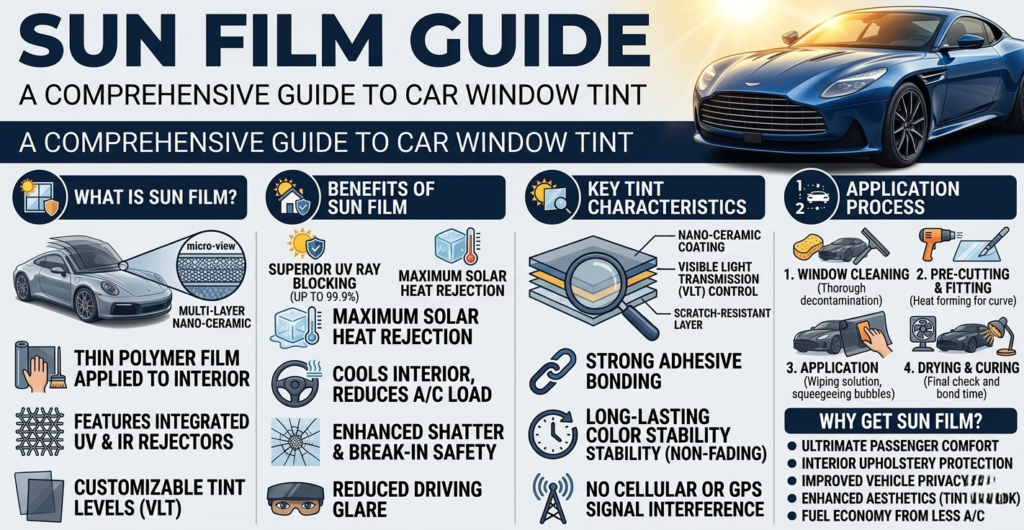
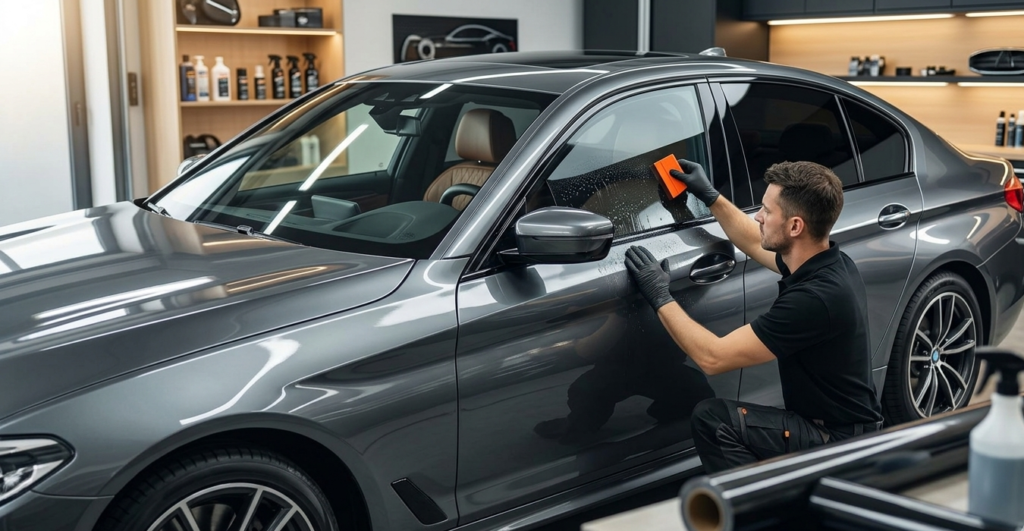
Sun film is a thin polyester film applied to the inside of car windows to reduce heat, block ultraviolet (UV) rays, and improve privacy.
It acts as a protective layer between sunlight and the car interior. Modern sun films can block a significant portion of solar heat and harmful UV radiation while still allowing visibility through the glass.
Sun films are widely used in cars to improve comfort, especially in countries with strong sunlight.
How Does Sun Film Work?
Sun films work by filtering sunlight and reducing the amount of heat and radiation entering the vehicle.
High-quality films contain multiple layers designed to:
- Reflect solar heat
- Block UV rays
- Reduce glare from sunlight
- Improve temperature control inside the cabin
Because of this, cars with sun film often feel cooler and more comfortable, even when parked under the sun.
Benefits of Sun Film
1. Heat Reduction
Sun film helps reduce the temperature inside the vehicle by blocking solar heat, making the car more comfortable during hot weather.
2. UV Protection
Many sun films block up to 99% of harmful UV rays, protecting passengers and preventing interior materials from fading.
3. Protects Car Interior
Continuous exposure to sunlight can damage:
- Seats
- Dashboard
- Leather interiors
- Plastic trims
Sun film helps extend the life of these materials.
4. Reduces Glare
Sun film reduces glare from sunlight and headlights, improving driving visibility and safety.
5. Adds Privacy
Tinted films reduce visibility from outside, giving passengers more privacy.
Types of Sun Films
Sun films come in several types depending on technology and performance.
Dyed Film
Dyed films contain dye layers that absorb heat and reduce glare.
Pros:
- Affordable
- Reduces brightness
Cons:
- Less durable
- Can fade over time
Metallic Film
Metallic films contain tiny metal particles that reflect heat and sunlight.
Pros:
- Good heat rejection
- Durable
Cons:
- May interfere with GPS and mobile signals
Carbon Film
Carbon films use carbon particles to block infrared light.
Pros:
- Strong heat reduction
- No signal interference
- Long-lasting
Ceramic Film
Ceramic films use nano-ceramic technology to block heat and UV rays.
Pros:
- Excellent heat rejection
- High clarity
- No signal interference
Cons:
- More expensive
Sun films are commonly classified into dyed, metallic, carbon, and ceramic categories based on how they are constructed and how they perform.
Pros of Sun Film
✔ Reduces interior heat
✔ Blocks harmful UV rays
✔ Protects car interior
✔ Reduces glare while driving
✔ Adds privacy
Cons of Sun Film
✖ Some films may interfere with electronic signals
✖ Low-quality films can fade or bubble
✖ Very dark films may reduce visibility at night
✖ Legal restrictions apply in many countries
Is Sun Film Legal in India?
The legality of sun films in India depends on Visible Light Transmission (VLT) rules.
According to regulations under the Central Motor Vehicles Rules:
- Front windshield: Minimum 70% light transmission
- Side windows: Minimum 50% light transmission
This means windows must allow enough light to pass through so drivers maintain visibility and safety.
Using very dark films that block too much light can result in fines and removal by traffic authorities.
How Long Does Sun Film Last?
Most sun films last 3–7 years, depending on quality and maintenance.
Factors affecting lifespan include:
- Sun exposure
- Film quality
- Installation quality
- Climate conditions
Sun Film Maintenance Tips
To maintain sun film quality:
- Avoid cleaning windows for the first few days after installation
- Use soft microfiber cloths
- Avoid harsh chemicals
- Park in shade when possible
These steps help prevent peeling or fading.
Sun Film for Cars: Benefits, Types, Cost, Pros & Cons FAQs
Does sun film reduce car heat?
Yes. Sun film reduces solar heat entering the car and improves cabin comfort.
Does sun film block UV rays?
Most high-quality sun films block up to 99% of harmful UV rays.
Can sun film protect car interiors?
Yes. It helps prevent fading and damage to seats, dashboard, and trim materials.
Does sun film affect visibility at night?
Very dark films can reduce visibility at night, so choosing the right tint level is important.
Final Thoughts of Sun Film for Cars
Sun film is a practical solution for improving comfort and protecting your car from sunlight. It reduces heat, blocks UV rays, and helps maintain your vehicle’s interior condition. Velora Detailing Studio.
However, it’s important to choose high-quality films and ensure they meet legal visibility standards.
When installed professionally, sun film can make driving more comfortable while helping your car stay cooler and protected.
Contact us today to install high-quality sun film for your vehicle.
👉 Book Your Sun Film Installation Today