How to Test the Quality of PPF
Complete Guide Before You Install
Paint Protection Film (PPF) is one of the best ways to protect your car’s paint — but not all PPF is the same.
Many car owners make the mistake of choosing cheap or low-quality PPF, which can lead to yellowing, peeling, and even damage to the original paint.
At Velora Detailing Studio, we believe customers should understand how to identify high-quality PPF before installation.
In this guide, you’ll learn:
- What defines high-quality PPF
- How to test PPF quality
- Signs of low-quality PPF
- What to check before installation
What is a High-Quality PPF?
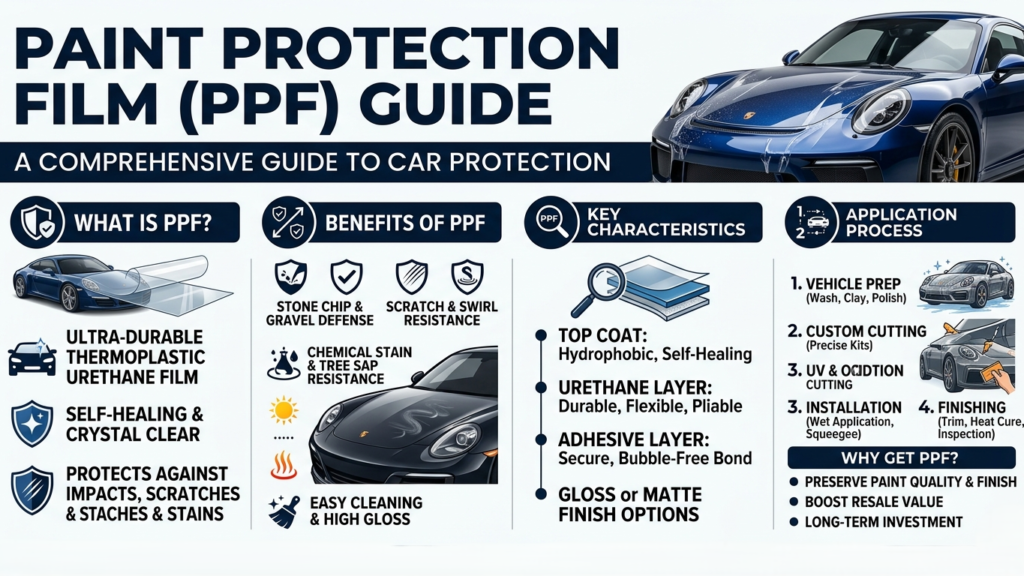
A premium PPF should have the following characteristics:
- Strong impact resistance
- High clarity (no dullness)
- Self-healing properties
- UV resistance (no yellowing)
- Durable top coat
Most high-quality films are made from TPU (Thermoplastic Polyurethane), which is flexible, durable, and long-lasting.
Why Testing PPF Quality is Important
Low-quality PPF can cause:
- Yellowing over time
- Cracking and peeling
- Poor protection from stone chips
- Permanent stains on film
- Adhesive damage to paint
Cheap films may fail quickly, especially in harsh climates with heat, dust, and UV exposure.
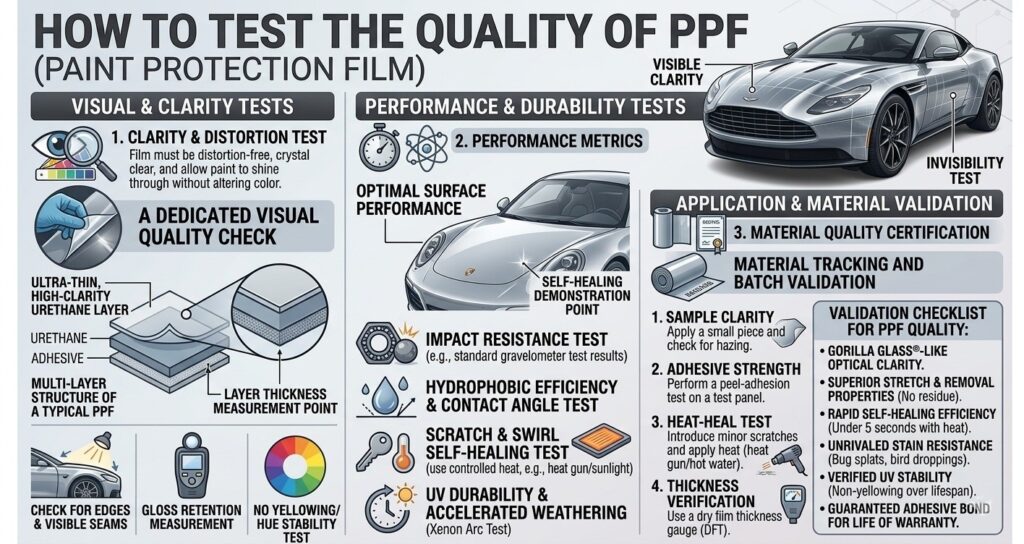
How to Test the Quality of PPF
Here are the most important tests you should know before installing PPF:
1. Thickness Test
Thickness directly affects protection.
- Good quality PPF: 8–12 mil thickness
- Thin films: Less protection
Thicker films absorb impact better and protect against road debris.
Ask your detailer to measure using a PPF thickness meter.
2. Self-Healing Test
High-quality PPF can repair minor scratches.
How to test:
- Lightly scratch the film surface
- Apply heat (hot water or sunlight)
Result:
- Scratches should disappear
This indicates a strong top coat with self-healing technology.
3. Clarity & Finish Test
PPF should be almost invisible.
Check for:
- Crystal clear transparency
- No haziness
- No “orange peel” texture
Low-quality films reduce gloss and make the paint look dull.
4. Stretch & Flexibility Test
Good PPF must be flexible for proper installation.
Test:
- Stretch a sample piece
Result:
- High-quality PPF stretches easily without tearing
- Premium TPU films can stretch up to 300–400%
Poor films crack or tear quickly.
5. Impact Resistance Test
This is one of the most important tests.
What it checks:
- Protection against stone chips and debris
Result:
- High-quality PPF absorbs impact without damage
Professional testing uses tools that simulate road debris impact.
6. Hydrophobic Test (Water Test)
This checks the top coat quality.
Test:
- Pour water on the surface
Result:
- Water should bead and roll off quickly
Good PPF has strong hydrophobic properties that help keep the car clean.
7. Chemical Resistance Test
PPF should resist chemicals like:
- Bird droppings
- Acid rain
- Tree sap
Low-quality films may stain or get damaged easily.
8. Visual Inspection Test
A simple but important test.
Check for:
- Smooth finish
- No bubbles or distortion
- Even surface
Premium PPF should look like part of the paint, not a layer on top.
Signs of Low-Quality PPF
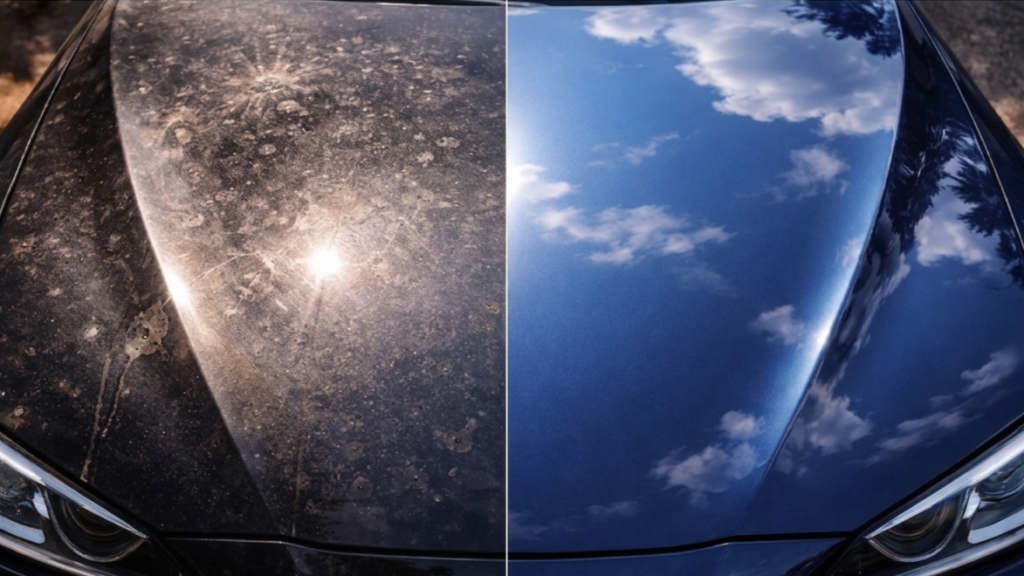
Avoid PPF if you notice:
- Yellow tint
- Poor clarity
- Weak adhesive
- No self-healing
- Low flexibility
- Cheap PVC material
Low-grade films often use PVC instead of TPU, which cracks and yellows over time.
TPU vs PVC PPF
| Feature | TPU (Premium) | PVC (Cheap) |
|---|---|---|
| Durability | High | Low |
| Flexibility | Excellent | Poor |
| Yellowing | No | Yes |
| Self-Healing | Yes | No |
| Lifespan | 5–10 years | 1–3 years |
Why Choose Velora Detailing Studio?
At Velora Detailing Studio, we only use premium-grade PPF with proven performance.
✔ High-quality TPU films
✔ Advanced installation techniques
✔ No bubbles or visible edges
✔ Long-lasting protection
✔ Expert technicians
We ensure your car gets the best protection without compromise.
Final Thoughts
Choosing the right PPF is not just about price — it’s about quality, durability, and long-term protection.
By understanding how to test PPF, you can avoid low-quality films and make a better decision for your vehicle.
Always choose a trusted detailing studio and verify the quality before installation.
Protect Your Car with Premium PPF
Don’t risk your car’s paint with low-quality film.
Get professional PPF installation from Velora Detailing Studio.
✔ High-impact protection
✔ Self-healing technology
✔ Long-lasting clarity
✔ Expert installation
Book Your PPF Installation Today